The Story of Chanderi: Woven Mist and Morning Gold
How a medieval fortress town created India's most luminous sheer textile.
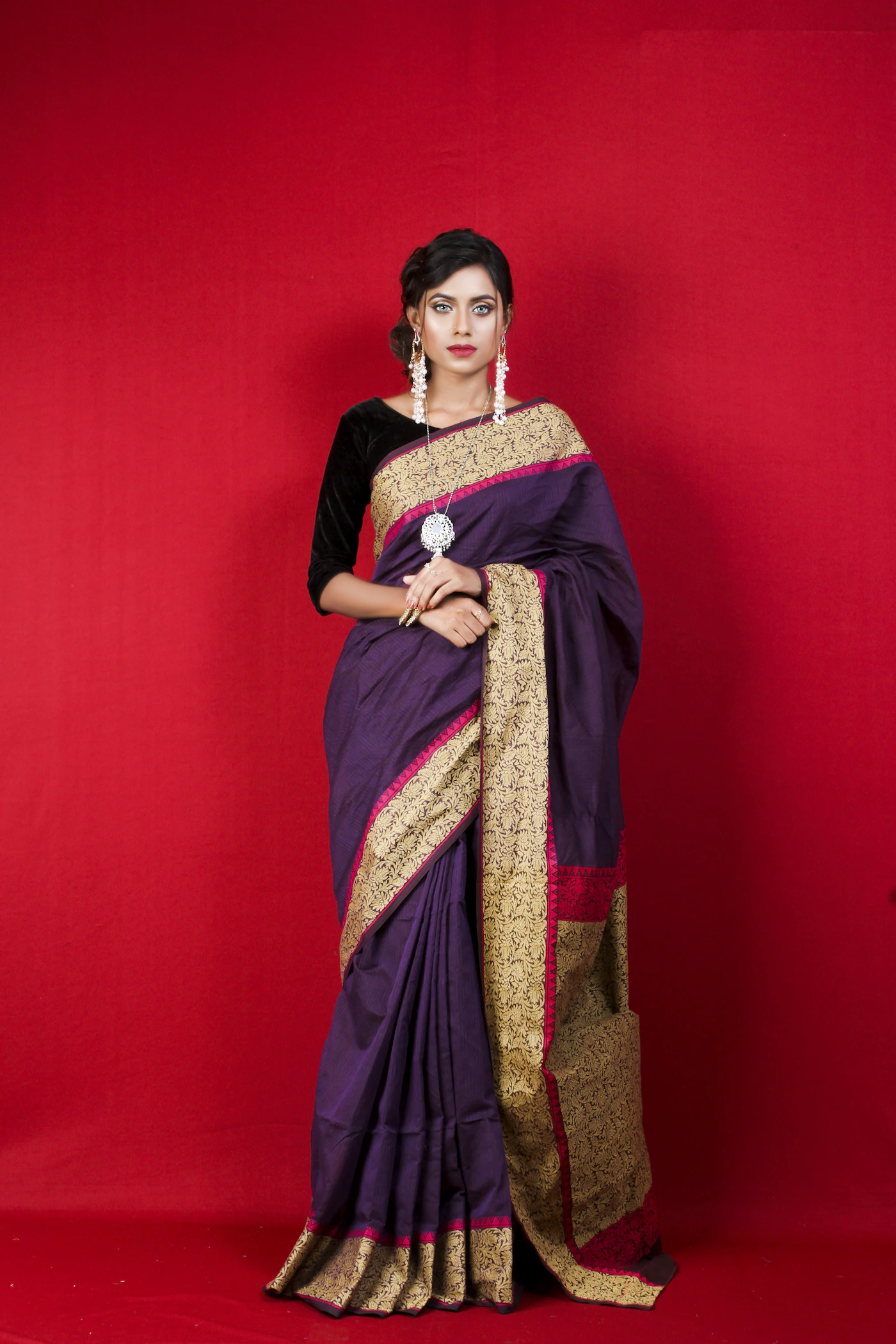
To touch authentic Chanderi is to wonder how warp and weft can hold so much light while holding virtually no weight. Nestled amidst the Vindhyachal hills of Madhya Pradesh, Chanderi's microclimate of rocky hills and river mist provided the ideal humidity for spinning extra-fine counts.
The Miracle of the Count
Historically, Chanderi was loomed with indigenous hand-spun cotton yarns exceeding 300 count. It was so sheer that court chroniclers in the Mughal era described women dressed in Chanderi as appearing draped in running water.
In the early 20th century, master weavers paired fine silk warp with cotton weft. This hybrid gave birth to the crisp, translucent body that remains the hallmark of authentic Chanderi today.
“Chanderi does not seek to dazzle; it illuminates the person who wears it from within.”

The Hand-Turned Zari Buti
Unlike industrial jacquards where threads are clipped mechanically, traditional Chanderi butis are created with tiny extra-weft shuttles called 'naal'. The weaver manually counts the warp threads, inserts the silver or gold strand, and beats the reed.
This produces motifs with smooth, sealed backs that never prick against bare skin—a mark of craft luxury that fast fashion cannot replicate.
At WOVENAIR, our Chanderi pieces preserve this featherlight integrity while softening the finish so the saree drapes like a gentle breath from the moment you wear it.
Related Dispatches
What Truly Makes a Handloom? A Guide for the Curious Eye
In an era of high-speed powerloom imitations, knowing how to read a saree's selvage, warp tension, and tactile weight is an act of cultural literacy and conscious consumerism.
STYLE · 4 min readFive Ways to Drape One Saree for the Contemporary Day
The saree is the world's most versatile unstitched garment. Here are five distinct drapes that celebrate freedom of movement, paired with tailored trousers, knit sweaters, and oversized shirts.